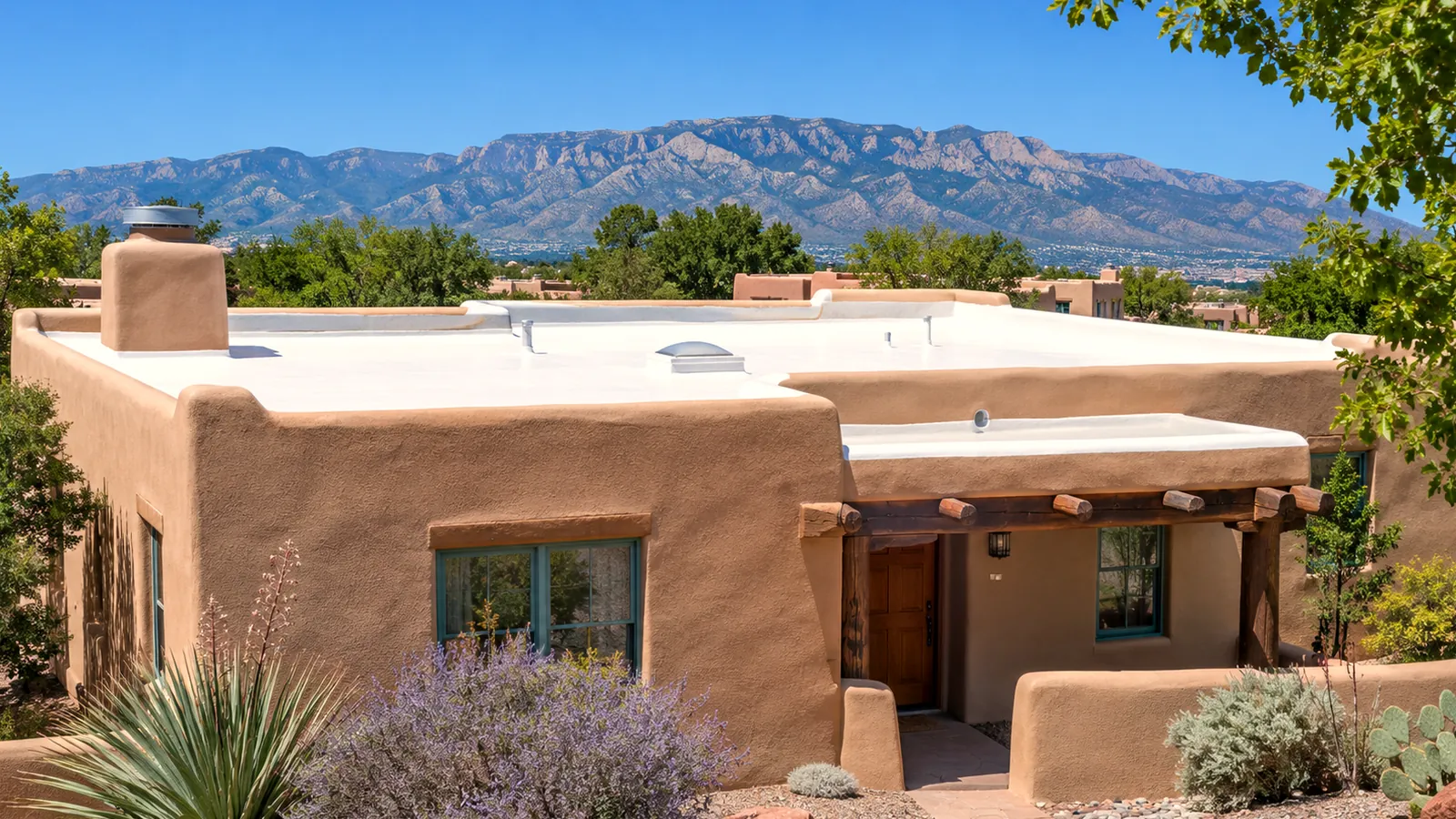
How these roofs are built
A flat roof on a Corrales adobe usually sits behind parapet walls and drains through canales. Over the years, many have gone from tar and gravel to rolled roofing to sprayed foam with a coating on top. Some older homes have all of those layers stacked up. Knowing what's under the surface decides what the roof needs next.
What matters most on an adobe
- The walls. Water that gets into the top of an adobe parapet can soften it from the inside. Sealing parapet caps protects the house, not just the roof.
- The canales. They carry every drop off the roof. Under Corrales cottonwoods they clog fast.
- The roof-to-wall joint. The coating has to turn up the inside of the parapet and stay bonded as the house moves.
- Old layers. Peeling coats and wet patches have to come off before anything new goes on.
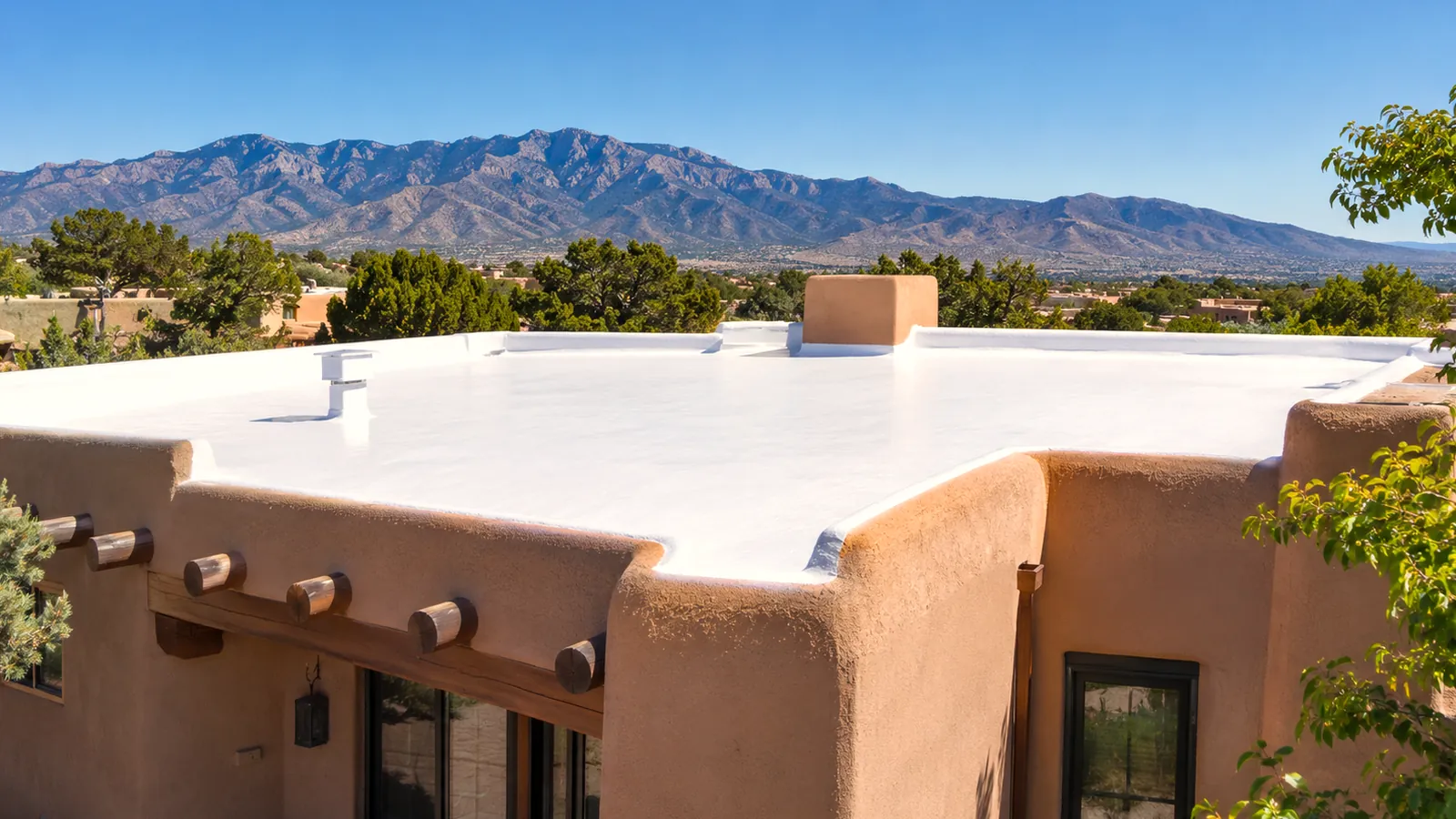
Our process
- Walk the roof, probe the foam and check every parapet and canale
- Wash off dirt, leaves and loose coating; let the roof dry
- Cut out wet or damaged areas and rebuild them
- Reinforce corners, cracks and canale joints with fabric and coating
- Apply the topcoat at full thickness, in two passes
Respecting older homes
On historic or true adobe homes, we pay attention to how the walls breathe and how the parapets were finished. If a parapet has mud plaster, we'll talk with you about the right way to protect it. See caring for adobe parapets.
Call (505) 448-8513 to have your adobe roof looked at.
Common questions
Is my home real adobe?
Older Corrales homes often are. Many newer homes are frame or block with stucco built in the adobe style. Wall thickness is the easiest clue.
Can you coat over a tar and gravel roof?
Sometimes, after loose gravel and wet areas are dealt with. An inspection tells us.
Will the coating show from the street?
Flat roofs behind parapets are rarely visible from the ground.